The main causes of toenail fungus
Whether they stem from the external environment or a person’s physiology, a number of factors can trigger the onset of a nail fungus.1,2
Environmental factors
In most cases, fungal infections under the nails occur following exposure to certain environmental factors. Keep in mind that foot fungus has two best friends: heat and moisture. It is under these conditions that it is best placed to develop. Wearing tight, closed and poorly ventilated shoes can contribute to this. Similarly, socks made from synthetic materials, such as polyester or polyamide, do not allow the foot to breathe. Exercise can raise the body’s temperature and cause sweating. Maceration can lead to the development of nail fungus.
Another risk factor that affects a large proportion of the population is smoking. Indeed, smoking is thought to have a harmful effect on blood circulation and the oxygen supply to the nails. Applying semi-permanent nail varnish can also contribute to the development of fungal infections. The causes include the nail being smothered by nail varnish over a long period, the nails being weakened by acetone, and hygiene conditions that are not always ideal.
Please note: onychomycosis (nail fungus) is highly contagious. You can also catch it when swimming in a public swimming pool, through contact with the water or with surfaces shared with other people. More simply, it is also transmitted by contact with a person with intertrigo (toe fungus).
Physiological factors
There are certain predisposing factors that increase the risk of toenail disease. These include minor cuts and injuries to the foot, or nail deformities which may occur, for example, as a result of psoriasis. Immunosuppression can also cause toenail fungus because the weakened immune system is no longer able to fight the infection.
In addition, vascular and lymphatic diseases tend to weaken the skin and therefore the nails. Diabetes, on the other hand, disrupts blood sugar levels, which encourages the growth of a fungus called Candida albicans. It would also appear that age is a risk factor, as cases of foot fungus are more common amongst older people. Finally, if you already have athlete’s foot (a fungal infection between the toes), you are more likely to develop a fungal infection under your toenail, as the infection spreads.
People most at risk of catching a toenail fungus
Given all these risk factors, it follows that some people are more likely than others to develop nail fungus. These include people who are immunocompromised due to illness, medication or obesity. But also those with diabetes or a condition affecting the venous or lymphatic circulation. Workers whose jobs involve regular exposure to damp or the wearing of closed shoes are also at risk of developing the early stages of nail fungus. As sweat provides a favourable environment for the growth of fungi, athletes and people suffering from hyperhidrosis (excessive sweating) are often included among those affected. Finally, older people are more likely to develop foot fungus than the rest of the population.
Be aware that if you frequently suffer from other types of fungal infections (candidiasis, dermatophytosis, tinea, etc.) or have a family history of fungal infections, your risk is also higher.
How to prevent toenail fungus
Fortunately, there are a few simple steps you can take to prevent the main causes of toenail fungus. Here are all our tips to help you avoid having to put up with this unpleasant lodger:
- Clean your feet daily with a suitable soap,
- Dry your feet thoroughly after showering, emphasising the space between the toes,
- Trim your nails regularly and disinfect your nail clippers or scissors.
- Do not wait too long before showering after your workout, to avoid maceration,
- Do not share your bath towel with others and change it regularly.
- Machine wash your towels, bath mats and socks at 60°C to remove fungi,
- Limit the use of nail varnish and nail varnish remover on your nails,
- Wear shoes that fit properly, and choose breathable or open-toed styles when the weather allows,
- Choose socks made from natural fibres (cotton, wool, etc.),
- Wear flip-flops if you’re at a public swimming pool,
- Eat a balanced diet rich in selenium and zinc and trace elements that help maintain normal nails,
- Treat palmar hyperhidrosis, if you have it,
- Overall, take care of your nails to prevent them from becoming brittle.
Of course, if someone in your household has a toenail infection, avoid any contact with the affected area and do not share your towels with them. And if you already have a fungal infection between your toes (tinea or intertrigo), treat it straight away, otherwise it may lead to new fungal infections growing under your toenails.
URGO products against nail fungus
Urgo has developed a number of treatments which we recommend you use as soon as you notice the onset of nail fungus to prevent it from spreading.
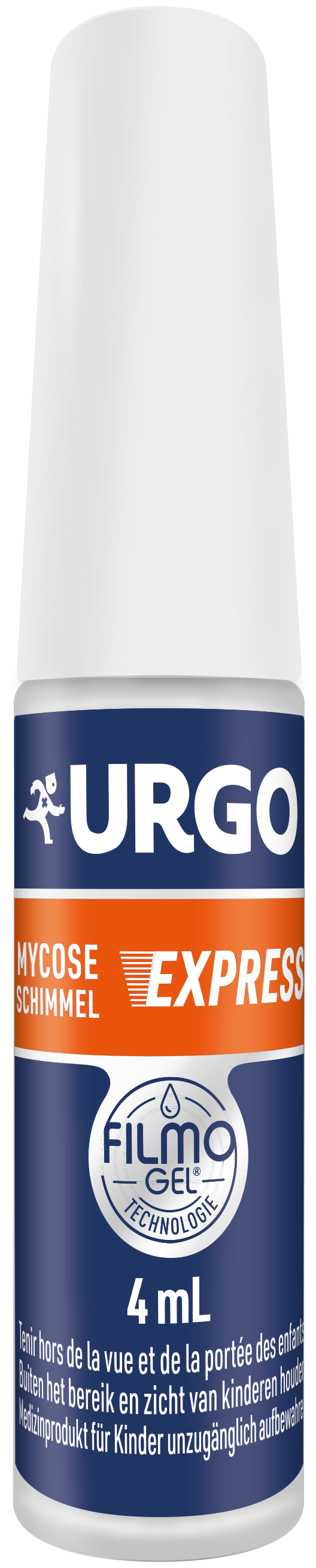
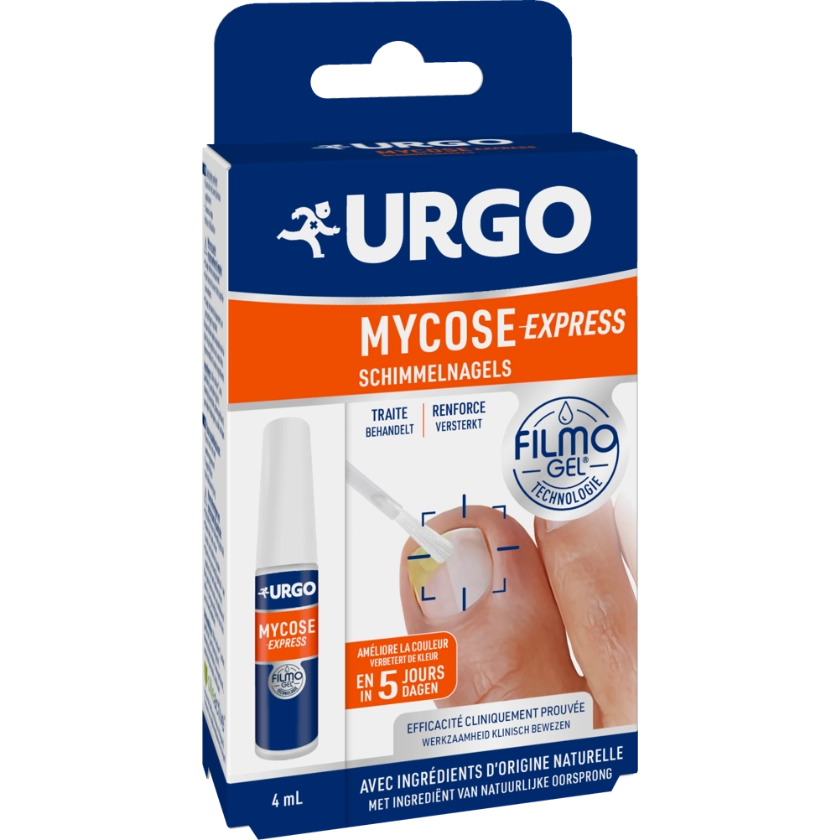
To promote healthy nail growth, there is URGO Filmogel® Express Fungal Treatment. Its formula penetrates the nail structure to treat foot fungus and strengthen the nail, which can take up to 18 months to completely re-grow!
The URGO product you need: URGO Filmogel® Express fungal treatment
If you want to both treat the fungal infection and conceal its unsightly appearance, try URGO Filmogel® Fungal Infection 2-in-1, which forms a coloured film to treat nail fungus whilst providing a nude finish.
For prevention, opt for URGO Fungal Infection Prevention Spray to spray on the soles of the feet and in the shoes. It has a dual antifungal and antibacterial action to protect you from the most common environmental causes of toenail fungus.
Finally, in the event of damaged nails, URGO Filmogel® Damaged Nails is quick and easy to use. Its liquid nail treatment cleanses, regenerates and protects nails damaged by a fungal infection or minor injury. This solution can be used to support treatment for a fungal infection, to help the nail to regenerate.