
Definition and symptoms of a burn
A burn is an injury to the skin that can be caused by various factors: prolonged or brief contact with a significant source of heat, chemicals, extreme cold, repeated rubbing, or inappropriate exposure to the sun.
Burns are classified into four categories, from first to fourth degree, according to their severity. A first-degree burn, also known as a superficial burn, affects the epidermis, that is, the outermost layer of the skin covering the dermis. The well-known ‘sunburn’ falls into this category. In most cases, it causes redness, dryness of the skin, a painful sensation and sometimes the appearance of a blister. But don’t panic – it usually disappears within a few days without a trace.
What should you do if you burn your finger?
When a burn occurs, the golden rule is speed! Indeed, the problem can spread if it is not dealt with in time. To prevent this, cool the wound, apply a soothing solution and then protect with a dressing.
First aid measures to take
Although it only takes a few days to heal, burns to the finger still require prompt treatment to prevent them from getting worse. To do this, you need to follow several steps.
First of all, move the person away from the source of heat that caused the burn. Next, make sure that it is indeed a first-degree burn and not a more serious one: the burn has only affected the skin and the underlying fat. The skin is intact but red and painful, there are no blisters or detached skin. Healing occurs spontaneously after 5 to 6 days.
Then, quickly cool the affected area by running tap water at room temperature over it. Keep running the water until the pain subsides for 20 minutes, using water at room temperature (but not ice-cold) and holding your hand 15 cm from the tap.
Once the skin has cooled, make sure you have clean hands and then clean or disinfect the wound (alcohol-free solution). Next, apply a generous layer of ointment suitable for superficial burns to the wound and the surrounding area using a sterile pad. This will help to soothe the skin and promote healing. If the pain is debilitating, you can take painkillers and consult a healthcare professional.
Natural remedies for a burnt finger
Certain plants and natural substances are recognised for their beneficial effects on the skin and can be of great help in treating superficial burns:
Aloe Vera possesses moisturising and regenerating properties on the skin. Apply a little aloe vera gel to your burn to speed up the healing process and rehydrate dry skin.
Propolis, produced by bees, is an antiseptic and anti-inflammatory that will help protect your skin from bacteria, soothe redness and promote healing.
Aspic lavender essential oil, diluted in a neutral oil, will play an anti-infection, anti-pain, soothing and healing role. Please note that this natural solution is not suitable for children.
And once the burn has been treated and the pain has subsided, applying a dressing to the wound helps to protect it from bacteria and everyday friction.
URGO’s solutions for finger burns
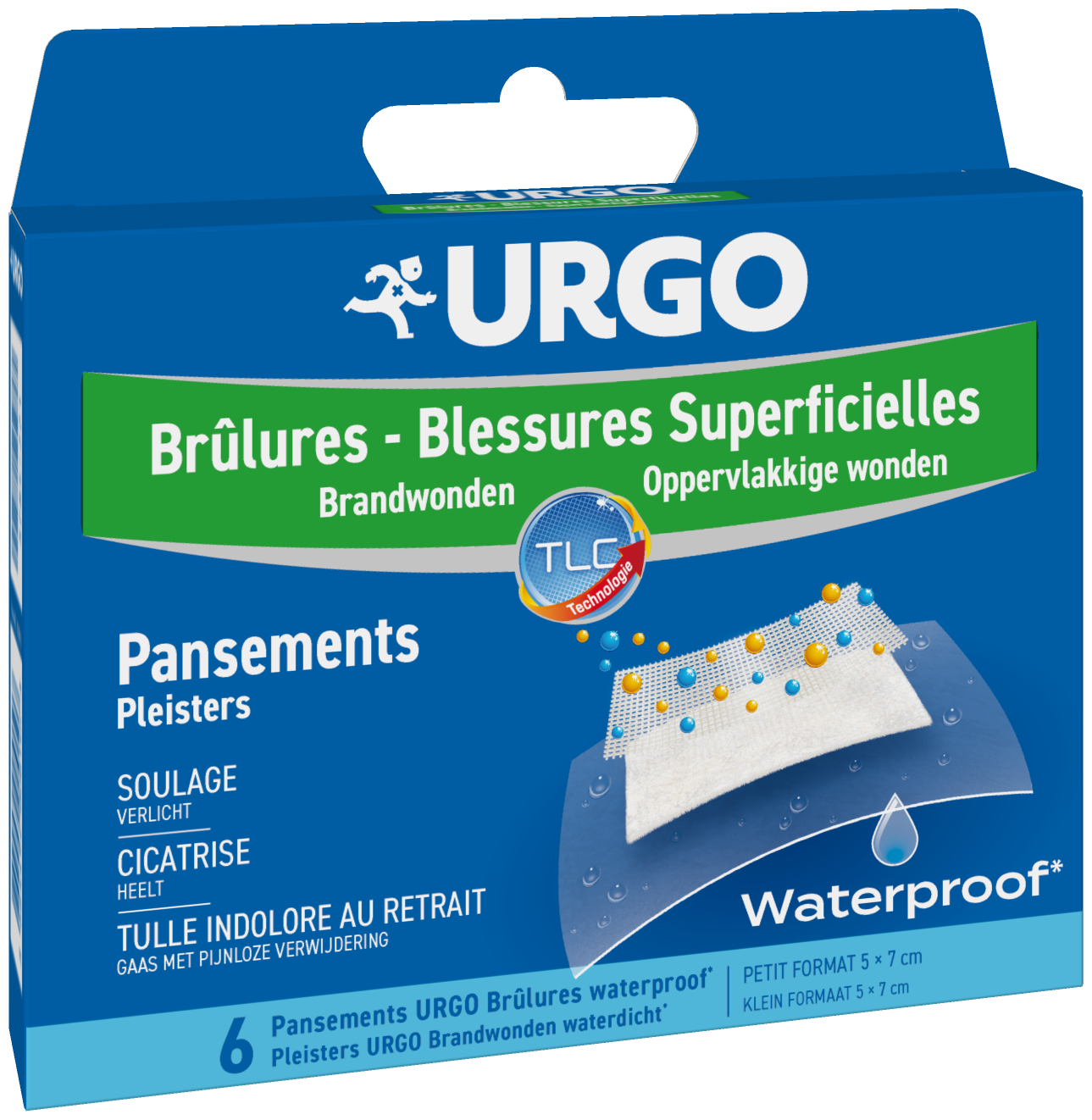
After applying a suitable cream or a natural remedy, you should cover the burn on your finger with a dressing. This last step increases healing efficiency. URGO Burns, Superficial injuries Sterile tulle dressing is to be applied directly to the burn on the finger. Its lipid-colloid technology (a combination of hydrocolloid particles and petroleum jelly) helps to relieve pain and promotes healing. It can be removed easily and painlessly, as it does not stick to the skin.
We have developed this product as a stretch dressing with URGO Burns, Superficial wounds Sterile dressing. The dressing is always painless to remove and helps the burn to heal, whilst soothing any pain.
Please note that for URGO Burns, Superficial wounds sterile dressings and tulle dressings, there is no need to apply a cream beforehand.
The URGO product you need: URGO burns, superficial wounds, sterile dressing
Finally, thanks to their hydrogel pad and honey, URGO Honey Healing Dressings create the right conditions for healing when in contact with the wound.
Bonus: a water-resistant, transparent backing for practical and discreet protection.
How to treat a blistered finger burn?
A blister may sometimes form on a burn, even on a finger. This is a natural reaction of the body that seeks to protect the deeper layers of the skin from infection. Therefore, do not pierce a blister under any circumstances! Act quickly by cooling the affected area and then cleaning with an alcohol-free disinfectant. Never use coloured antiseptics such as eosin on burns. Never use coloured antiseptics such as eosin on burns. Finally, apply one of our dressings to the burn to support its healing.
Promote the healing of the burn on the finger with the right nutrition
To give yourself the best possible chance, why not include in your diet the vitamins and trace elements known to help maintain healthy skin? Examples of these include:
Vitamin A contained in offal (liver, kidneys), eggs, fatty fish, but also pro-vitamin A in orange foods (sweet potato, carrot, melon, etc.);
Vitamin B2 in soft cheeses, parsley, shiitake mushrooms and egg yolk;
Vitamin B3 in white meat, oilseeds (peanuts, sesame seeds, etc.) or wheat germ;
Vitamin B8 in almonds, wholemeal bread, artichokes and brewer’s yeast;
Vitamin C (contributes to collagen formation and therefore normal skin function) in peppers, citrus fruits, strawberries or dill,
Iodine in marine products such as salt, seaweed or shellfish;
Zinc in whole grains, cocoa, pulses (red beans, chickpeas, etc.) or nuts.
In most cases, a burn on a finger heals within a week with the right treatment. If redness and pain persist, consult your doctor. It is also essential to seek medical advice if the person affected is a young child or a baby, if clothing is stuck to the burn, if you notice a loss of sensation, or if the burn is third- or fourth-degree. You should also seek medical advice if you develop any new symptoms, such as a fever, discharge or feeling unwell.