Recognising common warts and verrucas
Common warts are most commonly found on the fingers or the back of the hand. They are usually dome-shaped (round and raised) and have a rough appearance.
Verrucas, on the other hand, are found on the sole of the foot. They may appear deep despite being confined to the epidermis, and are clearly demarcated by a thickening of the skin around the wart (horn). Their location can make them painful because of the pressure exerted on them. Finally, because of the presence of small blood vessels that look like blackish dots, verrucas can sometimes bleed.
Causes and prevention
The infection is mainly spread through the release of infected skin flakes into the environment by people with warts. A healthy person may then come into contact with the virus, which will penetrate the damaged skin and cause a wart to appear. To avoid catching an infection, avoid walking barefoot in high-risk areas (swimming pools, saunas, showers or gyms). For example, you could wear a pair of flip-flops or sandals when you are in public places where there is a risk of contamination.
To prevent the virus from spreading when you have a wart, do not share your bath towel or clothes, and cover the wart as much as possible (with shoes, sandals, specialised dressings, etc.).
When an infected person scratches, the viruses contained within the wart cells spread and are released onto the skin. This can create new warts by self-contamination. Wash your hands thoroughly after touching or treating your wart to prevent the virus from spreading and other warts from developing. Do not reuse a file or pumice stone that has been used to scrub a wart without first disinfecting it.
What treatments to treat warts?
Warts may disappear over time; however, as they are unsightly and can sometimes be painful, those affected may seek treatment.
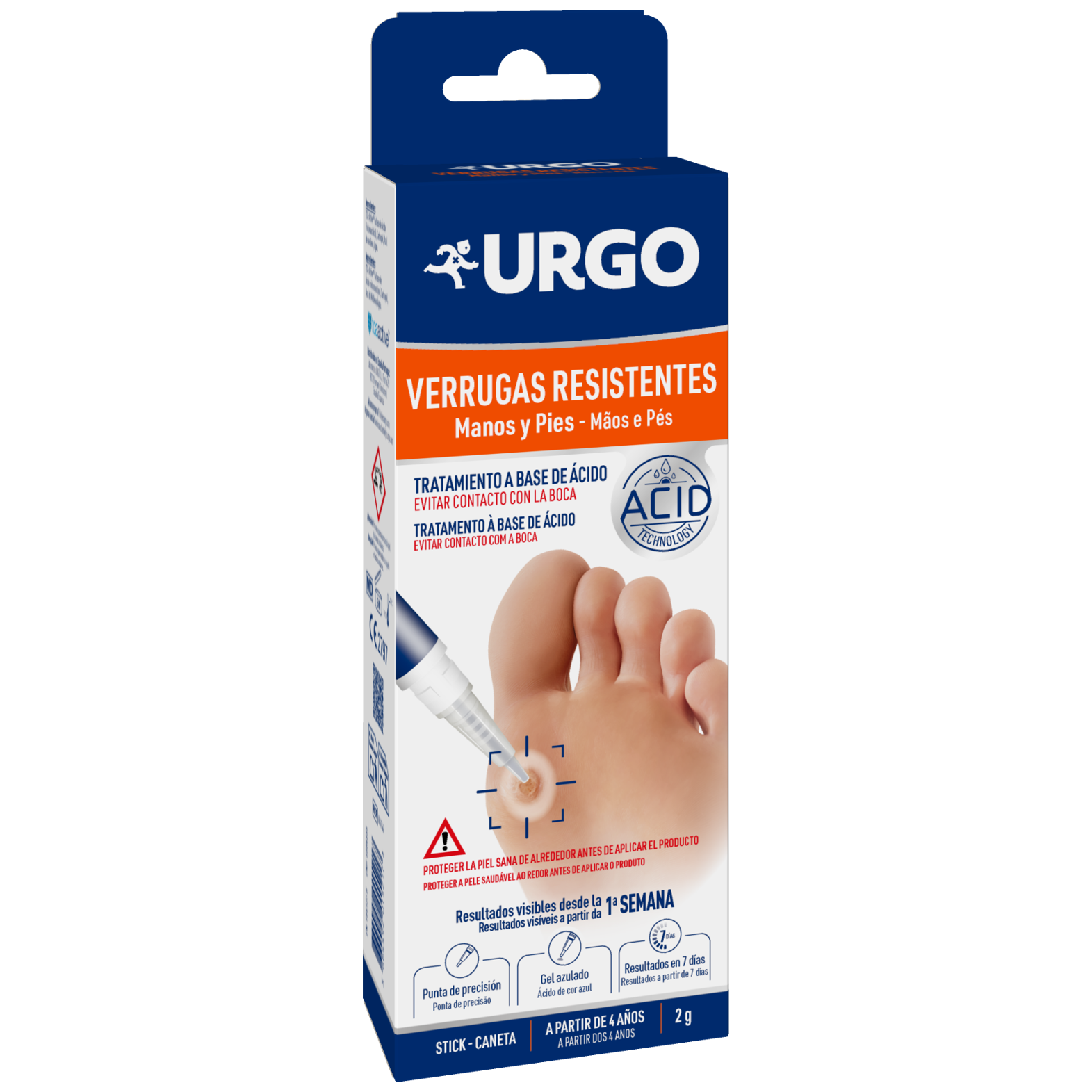
There are several types of home treatments available. The most common treatments are cryotherapy, which uses cold to destroy the wart – such as URGO Warts – Cryotherapy Treatment – and acid-based wart removers, such as trichloroacetic acid used in the URGO Stubborn Warts pen, for example, which require precision to target the wart effectively but are very effective.
The URGO product you need: URGO resistant warts, pen
URGO offers a range of tailored solutions to treat your warts:
If you want to treat your warts using cryotherapy, consider using URGO Warts – Cryotherapy Treatment. A ready-to-use home cryotherapy device that freezes the wart right to the core in just one treatment.
For stubborn warts, try the URGO Stubborn Warts pen. Its precision tip and bluish colour allow for very precise application. What’s more, TCA-Active™ delivers visible results from the very first week.
To find out more about warts, watch our ‘Fact or Fiction’ video to see how we debunk some common myths: Fact or Fiction: Warts | URGO