
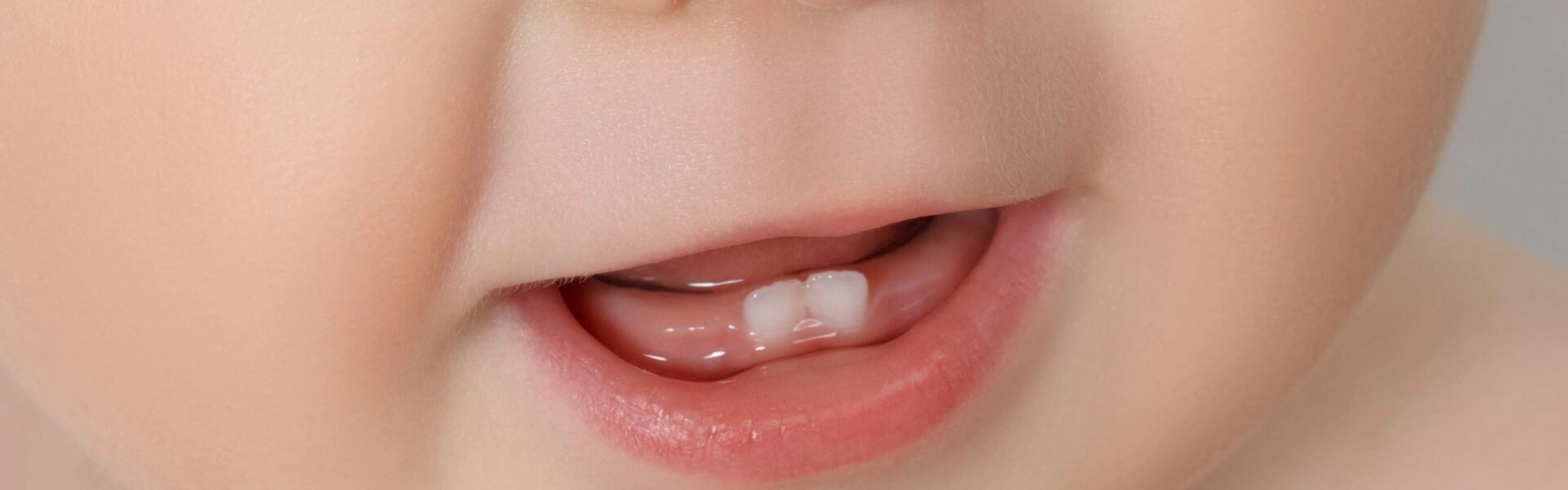
Signs of teething
Even if your child is generally well, teething can still cause some discomfort.
First of all, pain. It is caused by the movement of the teeth within the jawbone and their passage through the gum as the tooth grows. Your child’s cheeks may become red, and their gums may be swollen and taut.
You may also notice that your child is salivating more than usual. This keeps the mouth hydrated and protects the gums during teething.
You may also notice that your child is having trouble sleeping; this may manifest as difficulty falling asleep, waking up during the night or crying at night because of the pain.
During the day, your child may be more grumpy and irritable than usual. This may be due to the pain they are experiencing, but also to the tiredness caused by disrupted sleep.
Finally, teething, due to the symptoms mentioned above, can cause a child to lose their appetite to some extent.
The signs of teething can be unpleasant for both the child and their parents, but it is important to remember that teething does not make a child ill. If your child has a temperature of over 38°C, this is not a symptom of teething. Consider consulting a doctor in case of high fever or other clinical signs.
What should you do if your child is teething?
If your child is teething, there are a few ways to help relieve their discomfort. This is an unpleasant situation for your child, so do remember to comfort and cuddle them to help them through the teething process. Excessive salivation may eventually cause irritation. You can use a clean cloth to wipe their face regularly to prevent this irritation. Cold can help relieve pain; you can put a clean teething ring in the fridge before giving it to your child to chew on, and, depending on your doctor’s advice, you can also give them age-appropriate cold foods such as fruit purées or yoghurts.
Finally, massaging your child’s gums – using a clean finger or a clean, damp cloth, for example – can also help to soothe them.
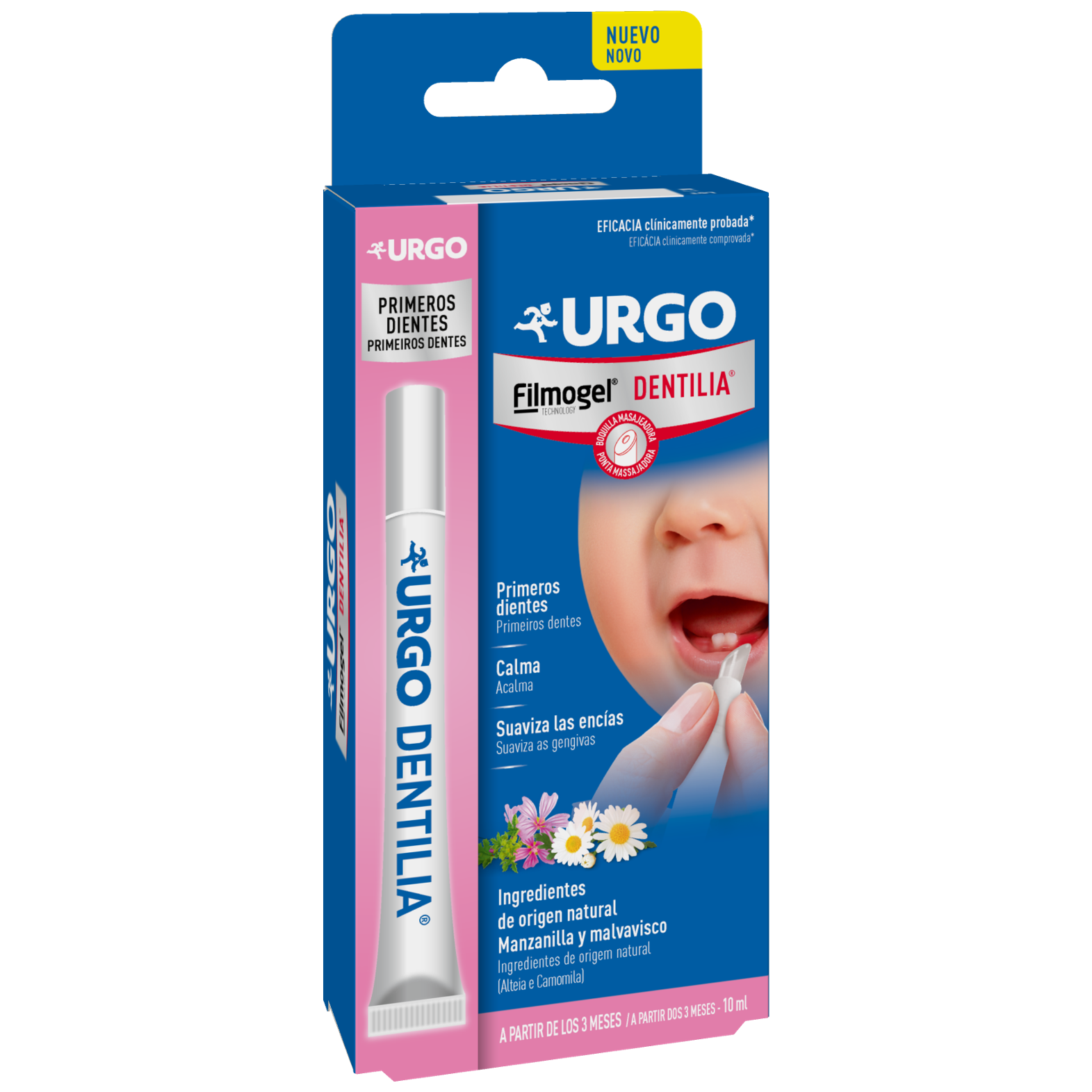
URGO Dentilia® is a unique triple action Filmogel solution. Its formula, based on natural ingredients – chamomile and marsh mallow – together with its massaging tip and muco-adhesive gel, has a soothing and softening effect on the gums. Use URGO Dentilia® to reduce babies’ crying, help them sleep better and reduce their salivation.
Things to avoid!
There are certain things you should avoid doing when your child is teething, as they could put your child at risk.
‘Anaesthetic’ gels, for example, should be avoided as they pose a risk of ‘aspiration’ when eating.
You should also avoid giving your child vegetables or fruit to bite into, as they could get stuck. You must not pierce the gum; this will not help the tooth to come through painlessly, and the wound will carry a risk of infection.
Finally, under no circumstances should you give your child alcohol or aspirin to relieve the pain.