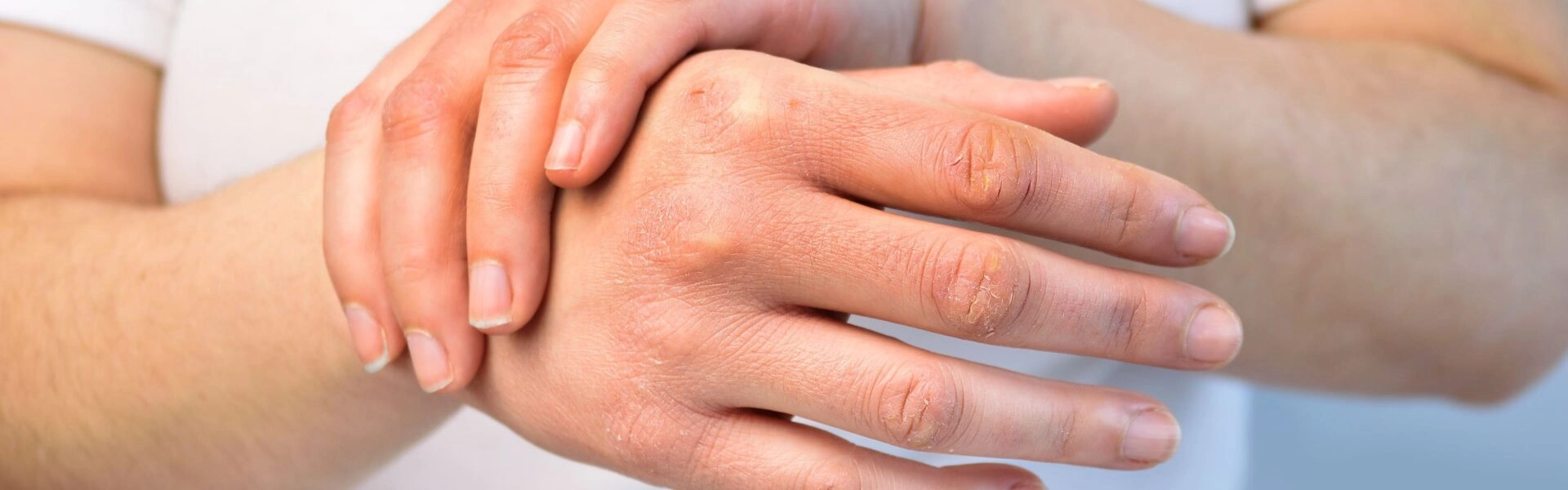

What are cracked feet and why do they occur?
Cracked feet are fissures in the skin of varying depths. They most often appear where the skin is thicker or has a corn, such as the heel.
But why do we get cracked feet? Firstly, because the skin on the feet is naturally less well moisturised than the skin on other parts of the body. If the skin is exposed to cold, damp, heat or friction, the feet become very dry. Dehydration can cause the skin on the heel to become fragile and split, particularly when it is stretched whilst walking, due to the movement and the body’s weight. When the skin barrier is breached and the splits become more severe, this is known as cracks.
Cracked feet are considered unsightly by many people. Furthermore, they can make walking difficult, be painful and bleed. As the skin barrier is compromised, cracks can allow micro-organisms to penetrate the skin, leading to infections.
Damaged, very dry, cracked feet: how to prevent and treat cracked heels
• Limit bathing and showering to 5-10 minutes.
• Use a mild, fragrance-free cleaner.
• Dry the skin on your feet carefully and gently.
• If you have corns on your heels, gently rub the thickened skin on the surface with a pumice stone.
• Moisturise the skin on your feet within 5 minutes of washing them using a special foot cream. Reapply whenever you notice your heels are dry.
• Avoid wearing ill-fitting or open-heeled shoes.
For further information: How to prevent and treat cracked hands and feet
Diabetic foot: dryness and cracking of the skin in people with diabetes
Did you know that dry skin is very common among people with diabetes? Indeed, diabetes leads to a reduction in sebum production and a decrease in the skin’s moisture levels, which weakens the skin barrier. The cells in the stratum corneum of the feet also adhere less well to one another, which makes them more prone to cracks and fissures.
Furthermore, diabetes can cause nerve damage that reduces sensation in the feet. People with diabetes may not realise they have a foot injury, corns or cracks. Moreover, diabetes can reduce blood flow to the feet: as a result, the skin on the feet is less well nourished and does not heal properly. All these problems are collectively known as ‘diabetic foot’.
Wounds that develop on a diabetic foot are slow to heal, and if they become infected, serious complications may arise. If you have diabetes, it is therefore very important to look after your feet every day. You need to look after and protect the skin on your feet by treating very dry feet as soon as possible and preventing cracks.
Daily foot skin care tips for diabetics
• Examine your feet carefully every day so that you can spot any corns, cracks or fissures as early as possible.
• Wash your feet every day with lukewarm water, and dry them thoroughly, making sure to dry between your toes as well.
• Every day, apply a moisturising, nourishing and protective cream suitable for the very dry skin of people with diabetes that is prone to cracking.
• Never walk barefoot, indoors or outdoors.
• Wear comfortable shoes – ones that aren’t too tight and don’t have any sharp seams – and always wear socks.
If you have diabetes, the skin on your feet is very delicate: do not use a pumice stone or any other tool to remove calluses yourself. Have your feet checked regularly by a healthcare professional, and seek advice straight away if you notice any thick corns, ulcers or sores, however small.
The URGO solution: URGO Filmomousse Intense Hydration Very dry to cracked feet
URGO Filmomousse® Intense Hydration is a medical device for the treatment of very dry skin and cracked feet. Suitable for diabetic feet.
How does it work?
Filmomousse® technology forms a breathable protective film on the skin that shields it from external factors, such as moisture and perspiration, without interfering with its natural functions.
What are its benefits?
URGO Filmomousse Intense Hydration Very Dry to Cracked Feet provides intense moisturisation, improves the skin’s barrier function in very dry to cracked feet², and reduces dryness, chapping and cracks on the feet¹. Its effectiveness has been proven by clinical studies: skin hydration increased significantly within a week (+50%)¹, whilst skin dryness, cracking and the degree of corn formation improved significantly after 29 days of treatment².
It can be applied between the toes without increasing the risk of bacterial infection¹, which is a benefit for people with diabetic feet. As it is non-greasy, it can be used immediately before putting on compression stockings.
How to use it
Apply URGO Filmomousse Intense Hydration Very Dry to Cracked Feet twice a day to the affected areas.