
Understanding Adult Acne
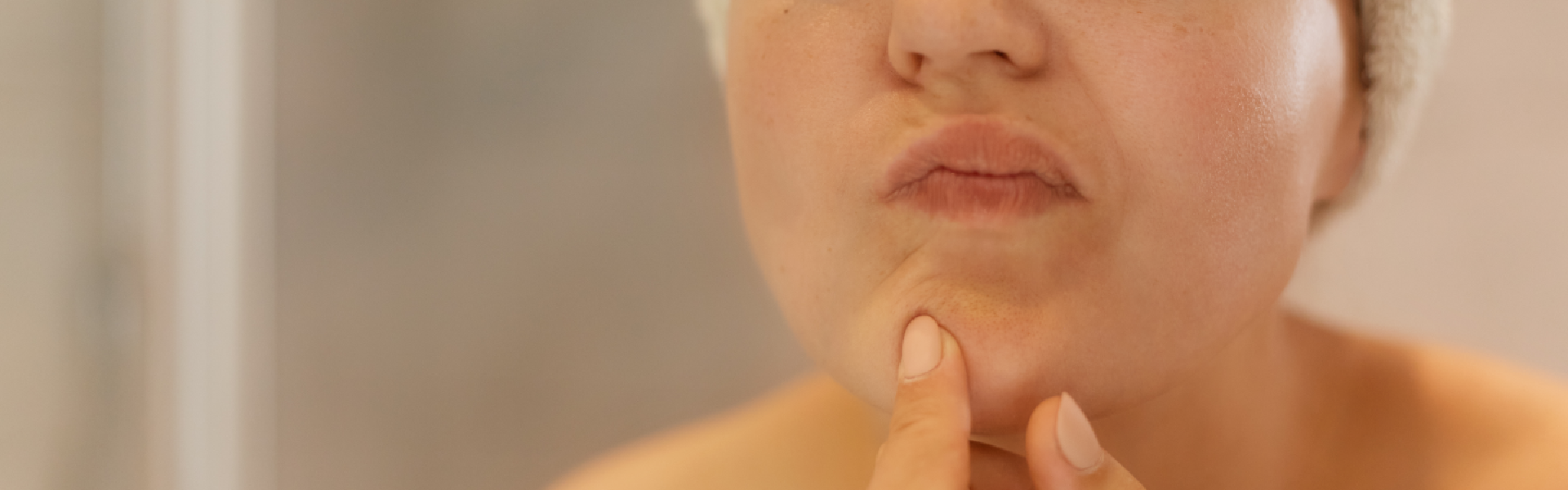
Adult acne refers to blemishes that persist or return after the age of 25. In practical terms, it is an inflammation that develops around the hair follicle.
It occurs when the skin produces too much sebum and the pores become blocked. This "plug" traps sebum and dead skin cells. It disrupts the balance of the skin microbiome and eventually triggers spots: blackheads, microcysts, papules, pustules...
The face is the area most affected, particularly the lower part (chin, jawline). This is common, and often cyclical. By understanding this mechanism, we can take action. Gentle, non-comedogenic skincare and targeted measures help limit flare-ups.
Main Causes of Adult Blemishes
While adult acne has several causes, each of them can be eased with the right habits and appropriate skincare. Let's look together at the three main causes: hormonal fluctuations, and the impact of stress, sleep and diet.
Hormonal Fluctuations
In adulthood, your hormones play a key role in the appearance of blemishes.
Variations in androgens (such as testosterone), as well as progesterone and oestrogens, modulate the activity of the sebaceous glands. When these hormones fluctuate — during the menstrual cycle, when starting or stopping contraception, postpartum, or during perimenopause — they can increase sebum production and alter its composition.
Result: the follicle becomes blocked more easily (known as hyperkeratinisation), comedones form, and inflammatory flare-ups can appear, often localised on the chin and jawline². This phenomenon is natural, often cyclical, and reversible once hormonal balance stabilises.
Suitable routines exist to help manage these fluctuations day to day.
Lifestyle: Stress, Sleep, Diet
Beyond hormones, your daily life also plays a role in the appearance of blemishes. Chronic stress, for example, stimulates the production of cortisol, a hormone that boosts sebum secretion and promotes inflammation³. Insufficient sleep, a diet high in fast-releasing sugars, or smoking, all amplify this phenomenon.
When it comes to skincare, certain mistakes are common: harsh cleansers, repeated exfoliation, occlusive or comedogenic products... These habits often come from good intentions, but can weaken the skin barrier and worsen inflammation².
Finally, repeated friction — masks, phones pressed against the cheek, scarves — can irritate the skin and promote what is known as mechanical acne: spots localised where the skin is under strain⁴.
Habits to Avoid to Prevent Worsening Blemishes
Certain well-intentioned habits can actually weaken your skin:
- Abrasive scrubs: they irritate the skin and stimulate sebum production.
- Highly occlusive oils: they can clog the pores.
- Over-cleansing: washing the face too often unbalances the skin.
- Repeated friction: avoid touching your face, and remember to clean your phone regularly.
Your skin also reflects your lifestyle. A few simple adjustments can help:
- Quality sleep: skin regenerates at night.
- Stress management: stress can worsen acne flare-ups.
- A balanced diet: favour foods with a moderate glycaemic index (fewer fast-releasing sugars) to limit the insulin spikes that can stimulate sebum production.
If blemishes persist despite these measures, or if scarring appears, do not hesitate to consult a dermatologist. They will be able to offer personalised, tailored support.
You are not alone in dealing with acne. With patience, consistency and the right habits, you can achieve more balanced, calmer skin.