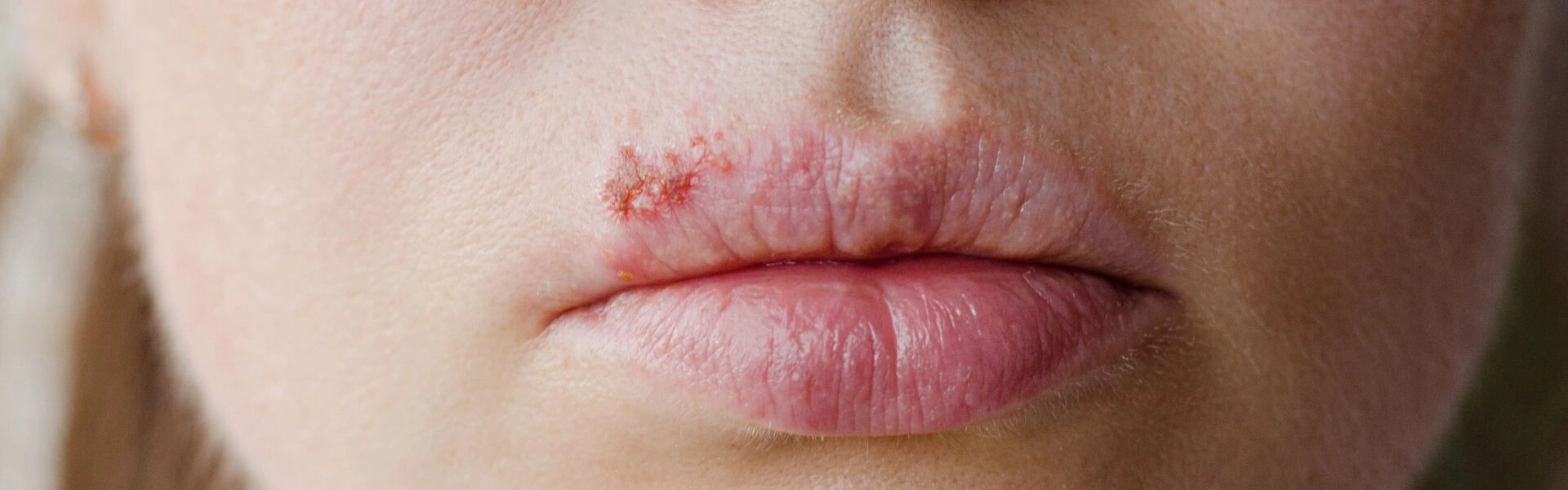

What Is a Cold Sore?
A cold sore, or herpes labialis, is a recurring viral condition caused by the Herpes Simplex Virus 1 (HSV-1).
This virus is transmitted through direct contact, through a simple kiss or through saliva: cold sores are therefore highly contagious.
Once in the body, the virus lies dormant and can be reactivated at certain times in life. Fatigue, stress or sun exposure can trigger a cold sore.
It then presents as a cluster of painful blisters, red at first, which gradually dry out to form a scab. The condition generally lasts around ten days before clearing up. While 90% of adults carry the HSV-1 virus, only 20% of them experience symptoms several times over their lifetime.
What Are the Symptoms of a Cold Sore?
Herpes labialis generally appears on the outer edge of a lip. Before it appears, certain warning signs can indicate it's on its way, such as:
- A feeling of heat, burning and tightness at the site where the spot is about to appear;
- Tingling or itching;
- A slight fever.
Once established, a cold sore can cause:
- Pain in the lip;
- Small fluid-filled blisters on the lip;
- Blisters that burst and turn into a scab;
- Fever;
- Sore throat and headaches;
- Gum pain;
- Swollen glands.
Herpes labialis can lead to fairly rare complications such as keratitis (affecting the cornea) if the infected person touches their eye after touching their cold sore. It can also spread to other areas of the face and to the fingers.
Cold Sores and Pregnancy: What Are the Risks?
During pregnancy, cold sores carry several risks for both mother and baby. During pregnancy, the body undergoes numerous hormonal and immune changes that can encourage the virus to reactivate.
The good news is that, in most cases, a cold sore has no impact on the baby. The virus stays localised to the mouth and does not cross the placental barrier.
The main risk concerns genital herpes, which, if contracted during the last trimester, can be transmitted to the baby during delivery. But a cold sore on the lip has no direct consequence for the foetus. If the mother has a primary infection (first contact with the virus) during pregnancy, the risk of transmission to the foetus is higher than with a simple recurrence. A neonatal infection can lead to serious after-effects.
If a cold sore appears after birth, be careful with contact with the newborn: the herpes virus is dangerous for a newborn, whose immune system is still immature.
If you have a cold sore, avoid kissing your baby or bringing your face too close to theirs, wash your hands regularly, and wear a mask if needed.
Precautions to Take
To prevent a cold sore appearing during pregnancy, it's obviously essential to avoid kissing anyone who is infected, or any contact with their saliva.
If you have had herpes outbreaks before, tell your doctor, watch out for any pain, and use a condom during any sexual contact.
If a cold sore appears during your pregnancy, always inform your doctor so that suitable monitoring can be put in place, and follow hygiene rules carefully. Wash your hands after touching the lesion and wear a mask if needed.
Although cold sores are generally harmless, they call for particular vigilance during pregnancy. By adopting the right habits and staying in tune with your body, you protect both your health and your baby's.