

What Is a Wart and How Does It Develop?
Warts are caused by viruses from the human papillomavirus (HPV) family. They infect the epidermis through a small lesion or micro-crack in the skin. This contamination is encouraged by damp conditions, a weakened immune system, or repeated contact with contaminated surfaces. Once established, the virus causes abnormal multiplication of skin cells, forming a growth that is more or less rough, often painless but sometimes painful depending on its location.
The Main Types of Warts
There are several forms of wart, which differ in appearance, depth and the area in which they appear.
1. Common Wart: The Most Frequent
This is the "classic" wart. It often appears on the hands, fingers, around the nails or on the knees. It presents as a rough, rounded growth, either skin-coloured or slightly greyish.
- Characteristics: irregular surface, painless
- Population mainly affected: children and teenagers (childhood warts)
- Transmission: through direct contact or via contaminated objects
It can appear alone or in clusters, and multiplies if scratched or handled.
2. Plantar Wart: Painful Under the Foot
Located under the foot, often on the heel or forefoot, this wart is pushed into the skin due to the pressure exerted while walking. Subtypes to distinguish:
- Single plantar wart: solitary, well-defined, with a dark centre (small black dots linked to capillaries).
- Mosaic warts: a cluster of small warts side by side, more superficial but often more resistant to treatment.
- The "dead" plantar wart refers to a dried-out, inactive wart, a sign that treatment has worked. It nonetheless remains potentially contagious until it is completely eliminated.
3. Flat Wart: Thin and Discreet
This mainly affects the face, the backs of the hands or the legs. It is flat, smooth, small (less than 5 mm) and slightly raised.
- Characteristics: flesh-toned or slightly brownish
- Often multiple: several warts can appear at the same time
This type of wart is common in young adults, teenagers and children. Shaving, hair removal or friction can encourage their spread.
4. Filiform Wart: Elongated and Visible
This is distinguished by its thin, elongated shape. It mainly grows on the face, particularly around the lips, eyelids or neck.
- Appearance: long and narrow, often skin-coloured
- Main concern: cosmetic
This type of wart is more common in men, particularly after shaving, which can irritate the skin.
5. Black Wart: A Change to Monitor
A black wart does not refer to a distinct type of wart in its own right. Rather, it is a sign of the evolution or transformation of an existing wart.
This dark pigmentation may be due to minor bleeding under the skin, partial tissue necrosis, or a reaction to ongoing treatment, particularly cryotherapy.
This change can be alarming, but is not necessarily serious. However, if the wart suddenly changes in appearance, becomes painful, or is accompanied by other symptoms, it is recommended to consult a healthcare professional for a reliable diagnosis.
Other locations to be aware of While the hands and feet are the areas most commonly affected, warts can also appear on other parts of the body. The elbows and knees are common sites, particularly in children. The scalp can also be affected, although this is rarer. Finally, the genital area can be affected by specific warts called condylomas, which require appropriate management.
Warts in Children: Should You Be Worried?
In children, warts are common and, in many cases, disappear naturally within one to two years without treatment. However, some situations call for intervention.
If the wart is painful, bleeds, multiplies rapidly, or causes discomfort at school or socially, it may be worth treating it. The same applies if the child refuses to show or touch it, which may indicate psychological discomfort.
The treatments offered vary depending on the location and the child's sensitivity. Options include applying keratolytic solutions, using gentle cryotherapy, or protective dressings to reduce friction.
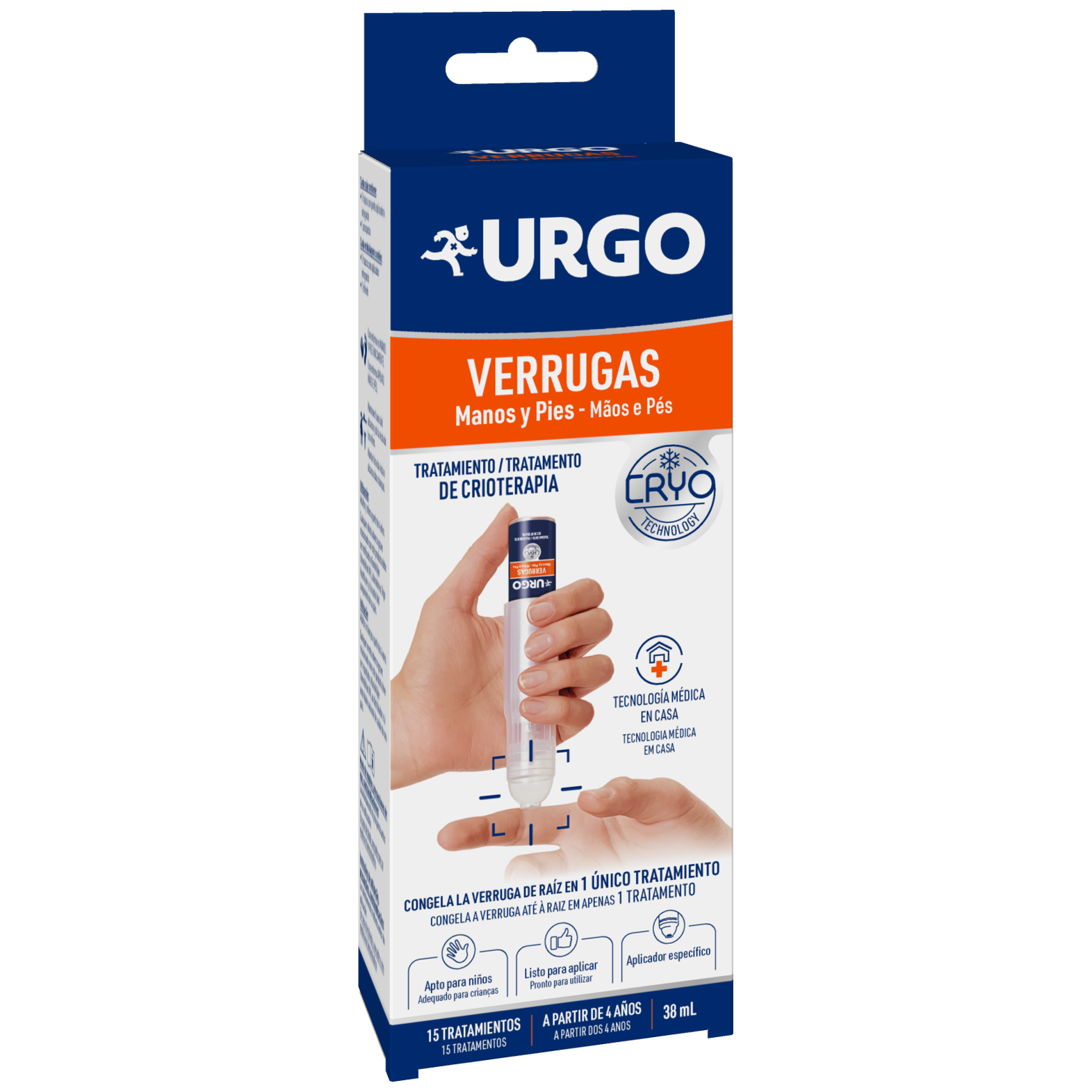
URGO offers several medical devices suited to these situations for treating common and plantar warts, such as wart treatment by cryotherapy (from 4 years) or the URGO Resistant Warts pen (from 4 years), designed for more stubborn warts on the hands and feet.
The URGO Product You Need: URGO Wart Treatment by Cryotherapy
Transmission: How Can You Limit the Spread?
The virus responsible for warts, human papillomavirus (HPV), is very easily transmitted through direct or indirect contact, particularly in warm, damp public places.
To reduce the risk, it's important to adopt good habits. Avoid walking barefoot in swimming pools, changing rooms or communal showers, and always use your own hygiene items such as towels or nail clippers.
Drying your feet thoroughly, especially between the toes, also helps limit the spread of the virus.
Finally, it is essential not to scratch an existing wart, as this risks spreading the virus to other parts of the body.
In children, good hygiene education helps significantly reduce the risk of spreading warts.
👉 To find out more, discover our tips for avoiding the appearance of warts and preventing those that develop under the feet.
Which Treatments for Which Warts?
Management varies depending on the type, location and progression of the wart. Here are the main options available:
- Keratolytic products: recommended as a first-line treatment for simple warts, these contain salicylic or lactic acid and allow for the gradual removal of infected skin layers.
- Cryotherapy: this method involves applying intense cold to the wart to destroy the contaminated cells. It is particularly useful for thicker or more resistant warts.
- Laser or electrocoagulation: these techniques may be offered if conventional treatments fail. They aim to burn or vaporise the wart under medical supervision.
- Local immunotherapy: used for multiple or recurring warts, it stimulates the immune system to help eliminate the infection.
For home treatment, URGO offers two effective devices:
- URGO Wart Treatment by cryotherapy, indicated for the treatment of common and plantar warts localised on the hands and feet (from 4 years); this treatment is simple to use and precise, with its specific applicator tip that freezes the wart at its core,
- URGO Resistant Warts pen, designed to treat the most persistent common and plantar warts localised on the hands and feet (from 4 years).
When Should You See a Healthcare Professional?
In some cases, a medical consultation is necessary.
This is particularly the case if the wart becomes painful, changes rapidly in appearance, or persists despite several weeks of treatment. Sudden proliferation, or a location on sensitive areas such as the face or genitals, also warrants specialist advice.
The same applies for people who are immunocompromised, or for children when the wart is poorly tolerated. The healthcare professional can then offer suitable treatment, ranging from cryotherapy to laser, or prescription keratolytic solutions.
Understand, prevent, act. Recognising a wart and adopting the right daily habits often helps prevent its progression or spread. While some disappear on their own, others require specific care.
If in doubt, or if you feel discomfort, do not hesitate to consult a healthcare professional. And to find out more, URGO offers practical advice and tailored solutions for every situation on its dedicated warts page.