Why do I have dry feet?
Did you know that, unlike the rest of the body, the skin on the soles of the feet has no sebaceous glands? However, these glands are responsible for the secretion of sebum, the lipids that form part of a protective skin film consisting of water and fat, the “hydrolipidic film”. The lipid component of the hydrolipidic film is essential for protecting the skin and maintaining its moisture levels.
In addition to this natural fragility of the skin on the feet, there are many factors that contribute to dry feet, such as:
- Wearing poorly fitting or high-heeled shoes and prolonged standing, which create pressure and friction areas on the feet;
- The heat and moisture inside closed, tight-fitting shoes such as trainers and ankle boots, which reduce the skin’s moisture levels on the feet;
- Wearing open-toed shoes (such as flip-flops) and exposure to the sun, sea water and sand in summer: all of these can leave your feet very dry and damaged, particularly around the heel;
- The use of drying soaps when washing your feet;
- Ageing: as we get older, the skin becomes less able to retain its natural moisture and grows thinner, so the feet are more prone to dryness;
- Certain medical conditions and medicines, which can contribute to dry skin.
How to recognise dry feet and calluses
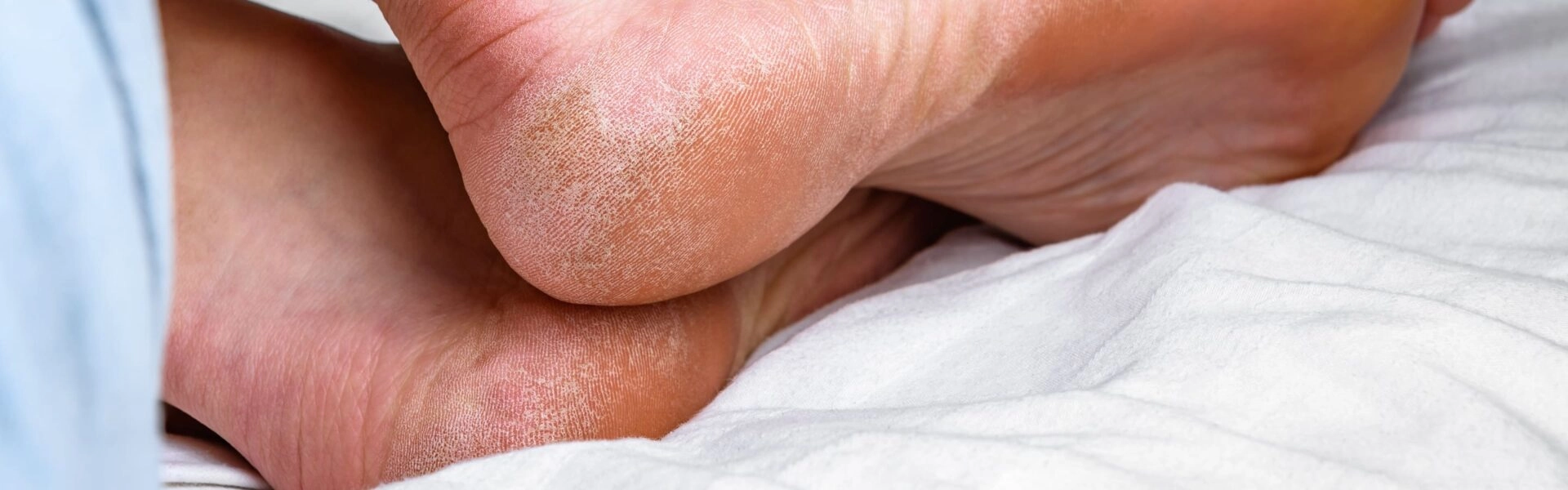
Dry skin on the feet results in flaking (peeling skin) and a rough texture to the touch. Dry feet can also lead to the appearance of areas of skin that are harder, rougher and yellowish, sometimes with a cracked appearance and fine cracks caused by a loss of elasticity, and occasionally accompanied by a tight, tugging sensation and itching.
If you don't take care of your feet, over time dryness can cause some areas of the foot to become hard and thickened, called calluses. Corn can form under the heel, on the tops of the toes, between the toes (or under the forefoot).
Cracks may also form, particularly in the heel area. Damaged skin on the feet can therefore become painful and make walking uncomfortable. For many people, dry feet and calluses are also an aesthetic concern.
How to care for dry and rough feet
First of all, make sure your feet are comfortable and well looked after.
To do this, wear comfortable shoes that fit your feet properly to avoid any pressure, shearing, rubbing or chafing. For your socks, opt for breathable materials such as cotton rather than synthetics. Next, don’t forget to keep your whole body hydrated by drinking throughout the day (1.5 litres of water a day): skin hydration comes from the inside too!
Now let’s move on to foot care. Cleanliness is important, but washing your feet should not completely remove the skin’s natural lipid barrier. For this, opt for short showers and baths with water that isn’t too hot. Avoid bubble baths and harsh soaps such as Marseille soap: when washing your feet, opt for mild soaps, such as ‘moisturising’ or ‘soap-free’ varieties, and preferably fragrance-free ones. Rinse and dry your feet thoroughly by dabbing them with a clean towel.
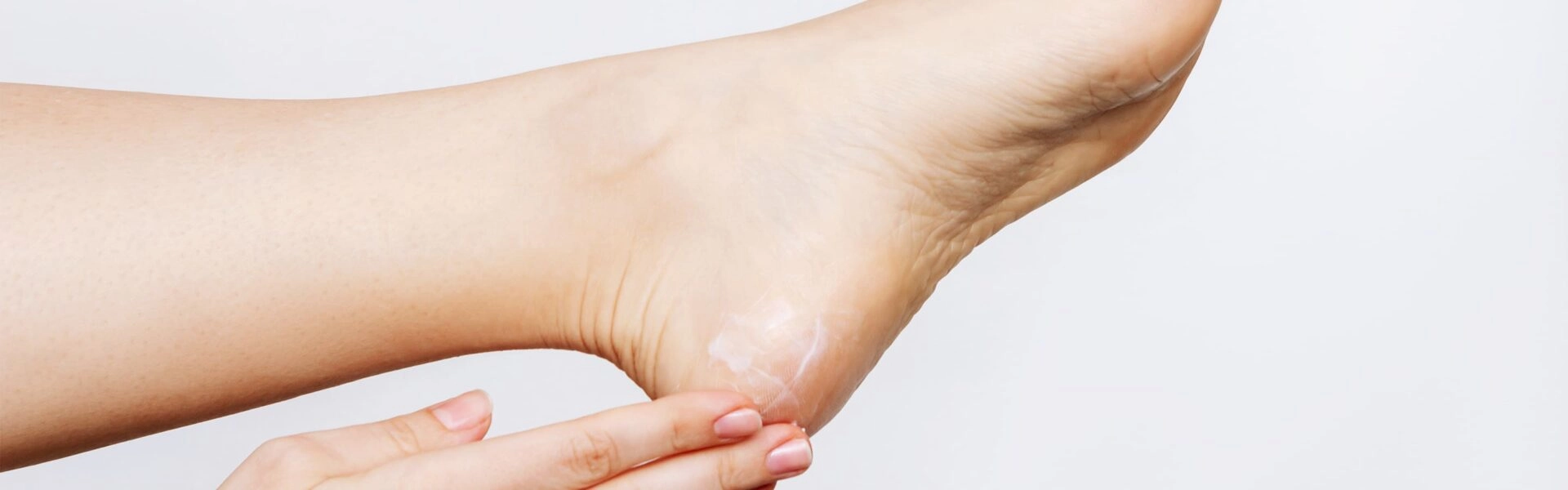
To combat dry feet, it is important to moisturise your feet every day. Applying a special foot care product for dry feet after washing, and in the morning and/or evening, helps to prevent the skin from drying out and the formation of calluses. The feet remain soft and supple.
What can you do to keep your feet smooth and soft?
What if you pampered your feet with a foot bath?
Use moderately warm water and soak your feet for 5 minutes, no longer. You can add a teaspoon of coconut or jojoba oil, or a few drops of vinegar (white or cider). Gently rub the hardened areas with a washcloth to soften the calluses, then pat dry gently with a towel – this will help remove dead skin cells and ensure your moisturiser is properly absorbed.
Next, massage your feet from toes to ankles using a special cream for dry feet. Certain ingredients that are effective at moisturising the skin on the feet, such as urea and glycerine, have been scientifically proven to be beneficial. They help to reconstitute the skin’s hydrolipidic film and make it softer, giving it a beautiful appearance and softness to the touch.
If your dry feet are linked to a medical condition such as diabetes, or if they have painful, red or infected cracks, consult your doctor.
The URGO solution: URGO Nourishing foaming cream - Dry to very dry feet
How does it work?
Biomimetic lipids are similar to those found in our skin; they help to restore the hydrolipidic film, protect the skin barrier and help prevent water loss.
Biomimetic lipids help to restore the skin’s natural protective barrier, as well as reducing dryness, soothing itching, reducing calluses and preventing water loss.
Thanks to its foam texture, applying URGO Nourishing foam cream for dry to very dry feet is easy, pleasant and economical: You only need half as much product as you would with a conventional cream for a single application. URGO’s nourishing foam cream for dry to very dry feet intensely nourishes and provides long-lasting hydration to the skin on the feet, forming a non-greasy, breathable protective film. This foot care protects against dryness, reduces rough patches and prevents the formation of calluses and cracks. The feet remain soft and supple.
How to use it
Apply a small amount of URGO Nourishing foaming cream for dry to very dry feet once a day. Your feet will remain moisturised and protected, without any greasy or sticky residue: you can put your shoes on straight away!
Calluses, crack prevention: additional solutions and advice
If you already have calluses on your feet, you can use a pumice stone or an exfoliating file to reduce the thickness of the callus. Also read our tips for preventing and treating cracked feet.